The scheduler that catches the conflicts your calendar cannot see
Scheduvia helps operational teams know who is where, catch what breaks, and protect time before it turns into missed coverage, missed meetings, or lost revenue.
One scheduler, configured for each industry
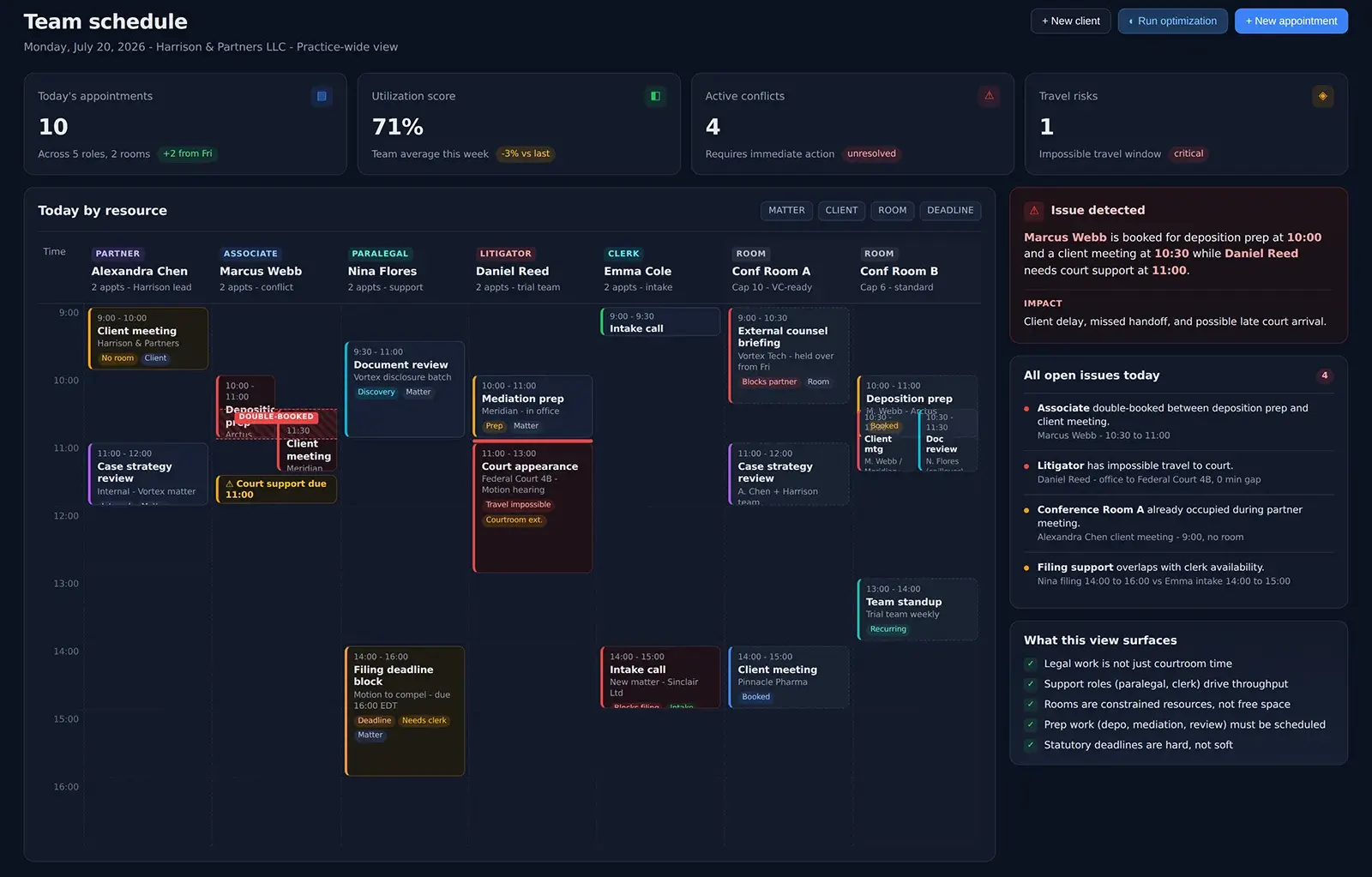
Click through the industries to see how the same scheduler changes labels, roles, event types, and rules without changing the core scheduling engine.
Operational teams pay to stop expensive mistakes
Teams do not pay for features. They pay to stop the scheduling failures that cost time, money, and credibility.
Scheduling Conflicts
Double-bookings and overlapping appointments damage client relationships and staff morale.
Idle Time Waste
Gaps between appointments eat into billable hours. Most firms lose productive capacity every week.
Travel Inefficiency
Without travel checks, staff routinely run late for court appearances, client visits, and on-site work.
Uneven Workloads
Some team members are overloaded while others sit idle, driving turnover and poor outcomes.
Built for high-stakes scheduling
Everything here exists to catch problems before people feel them in the real world.
Conflict Detection
Checks every schedule change instantly and flags double booking, travel risk, and resource collisions before they hit the team.
Travel Feasibility
Measures the gap between locations so people are not booked into impossible moves across town.
Utilization Visibility
Shows who is overloaded, who has capacity, and where the team is losing scheduled value.
Daily Briefs
Sends each person a plain-language summary of the day ahead, including issues that need attention first.
Shared Team View
Lets managers and coordinators see who is where, what is blocked, and what needs rebalancing.
Availability Rules
Respects working hours, coverage needs, and time constraints that normal calendars usually miss.
Built for sensitive operational information
Scheduling data can expose staffing pressure, client activity, patient operations, field movement, and other information teams cannot afford to handle casually.
Security-aware by design
Schedules can expose sensitive operational reality. We treat access, logging, rate limits, and tenant boundaries as product concerns, not afterthoughts.
Sensitive-data discipline
Legal matters, healthcare operations, staff location data, and education schedules all require restraint. We are designing for least-necessary exposure, controlled visibility, and clear handling boundaries.
Compliance-conscious rollout
Different industries bring different obligations. We are building the shared platform so privacy, auditability, access control, and retention can support those realities instead of ignoring them.
Up and running in minutes
Configure Your Industry
Pick one of the six supported industries and load the right vocabulary, roles, and event types.
Add Your Team and Locations
Set working hours, invite people, and define the locations and resources the schedule needs to respect.
Catch Problems Early
As the schedule fills, the system flags conflicts, tight travel, and coverage gaps before they become expensive mistakes.
Same product, different tenant vocabulary
The layout stays shared. The words, fields, rules, and economics change through tenant configuration.
Detection first, advice later
Scheduvia is being built around the problems buyers actually pay to avoid: impossible travel, double booking, missing coverage, and weak visibility into where time is going.
- Detects scheduling conflicts before they happen
- Flags tight travel windows before people leave late
- Highlights coverage gaps that leave work unattended
- Shows overload and underuse across the team
- Creates a daily brief in plain language